
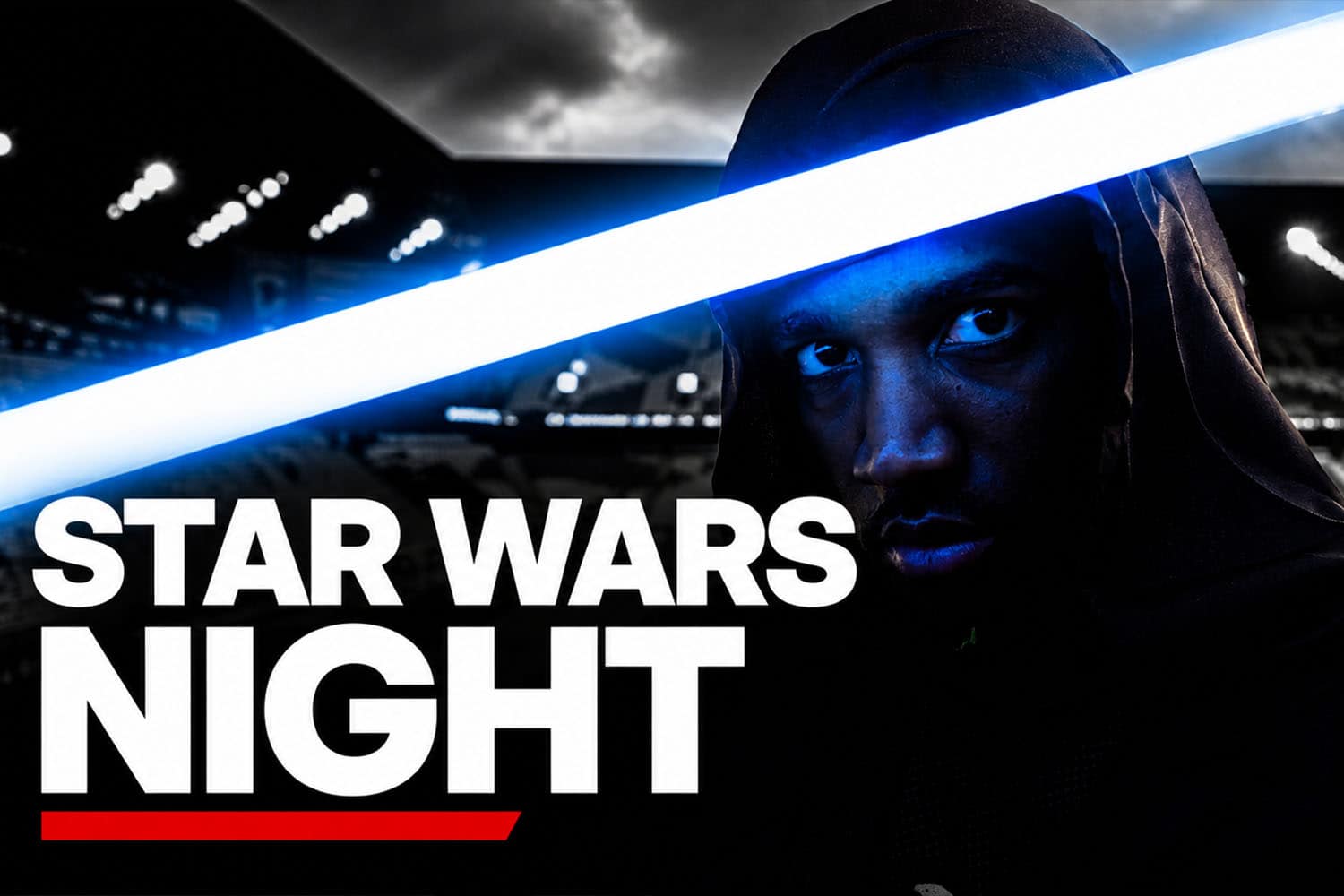
Hey! I’m Mike, I go by DJ AXCESS, and I’m a DJ, public speaker, and business coach based in Columbus, Ohio.
Watch the full video here: [YouTube Link]
Most people see the costume, the lightsaber, and the music. They do not always see the planning behind it.
That is the reality of being a professional sports DJ. The most visible parts of the job are usually the most fun, but they are only one piece of the full game day process. Before the music starts, there is parking, credentials, production meetings, equipment setup, soundcheck, communication systems, music strategy, and a constant awareness of what is happening in the stadium.
For this video, I brought the camera with me for Star Wars Night with the Columbus Crew at Lower.com Field. It was my first night back with the crew for the 2026 season, and the theme gave me a perfect reason to show what actually happens behind the scenes.
This post is for professional sports DJs, event DJs who want to understand larger productions, and Star Wars fans who enjoy seeing how theme nights come together inside a live stadium environment.
Professional Sports DJing Starts Before the Music
A lot of DJs think the job starts when they plug in.
At a stadium, that is not true.
The first challenge is simply getting into the building. Parking, load-in, credentials, timing, and knowing where to go all matter. It sounds simple until you are working in a venue with restricted access, staff entrances, security, production zones, locker room areas, press levels, and field access rules.
For professional sports DJs, being early is not optional. It gives you room to solve problems before they become visible.
On this day, my call time was 3:15, but I arrived much earlier. That gave me time to get parked, get my credential, move through the building, shoot content, check in with production, and mentally settle into the day.
That is part of the job people miss. You are not just showing up to play songs. You are entering a live production environment where timing and preparation matter.
Theme Nights Need More Than Costumes
Star Wars Night is fun because the theme is already strong.
Fans understand it. Families recognize it. The visuals work. The music is iconic. The lightsaber makes sense. But that also means expectations are higher.
You cannot just throw on a costume and play random Star Wars remixes.
For a theme night to work, the DJ has to know how far to lean into the theme without losing the room. Not everyone in the stadium is a deep Star Wars fan. Some people know every detail. Some people only recognize the main theme, Darth Vader, and maybe the lightsabers.
That changes the music strategy.
For my Star Wars set, I try to use remixes that are actually good as songs, not just recognizable as Star Wars references. There are a lot of Star Wars remixes out there, but not all of them work in a stadium. Some are too novelty. Some are too busy. Some only make sense to hardcore fans.
The goal is to make the theme feel exciting without making it feel like a gimmick.
That usually means using familiar Star Wars moments, blending them with EDM, house, or trap energy, and making sure the average fan can still enjoy the set. A theme night should support the event, not take over the event.
Warm-Up Music Has a Job
Before the match, the music has a very specific role.
It has to create energy without peaking too early. It has to support the players, fit the environment, and keep the stadium moving as fans arrive.
For this match, I planned to use a lot of Afro House mixed with EDM and Latin House for the Crew players. Afro House can create a strong groove and a cool atmosphere, but it can also lean chill depending on the tracks. That means I have to be intentional about where I add more lift.
Bad Bunny and Latin-inspired records also work well in warm-ups because they connect with the team and the crowd while still keeping the energy stylish and current.
That is one of the differences between professional sports DJs and DJs who only think in terms of party music.
The question is not just, “Is this a good song?”
The question is, “What does this moment need?”
Warm-ups, player intros, halftime, breaks, and theme moments all require different energy. The job is to understand the purpose of each part of the event and choose music that supports it.
Production Meetings Keep the Show Tight
One of the biggest differences between a private event and a professional sports environment is the production structure.
At a wedding or corporate event, the DJ may be working with a planner, venue manager, photographer, and client. At a stadium, the DJ is part of a much larger show.
There are scripts, cues, camera moments, sponsor reads, timing changes, entertainment features, halftime elements, and people communicating across different departments.
For this game, I had two production meetings.
The first was with a smaller group, focused on the pieces that directly affected me. The second went line by line through the full script. That meeting was longer than usual, but it mattered. The details are what keep the show clean.
Professional sports DJs have to be able to follow direction, listen for changes, ask questions, and stay flexible. You are not operating in a vacuum. You are one piece of a larger production.
That is why communication is so important.
Why I Prefer In-Ear Monitoring
One of the most important technical decisions in the video was my choice not to use a speaker monitor.
There was a monitor available, but I chose in-ears instead.
In a stadium or arena, monitors can be helpful because there is often delay between what the DJ hears and what the crowd hears through the main system. But if the DJ booth is close to fans, a speaker monitor can also create a messy listening experience for the people nearby.
They may hear the monitor and the main speakers at the same time, which can create an echo effect. As a fan, that is one of my least favorite things at festivals or large events.
So for this setup, I preferred to keep my sound controlled.
I had production communication in one ear and my own monitoring in the other. That gave me the information I needed without adding unnecessary noise to the people around me.
It does take practice. The first few times someone talks directly into your ear while you are DJing, it can feel strange. But once you get used to it, it becomes a powerful tool. You can hear cues, stay connected to the production team, and make better decisions in real time.
The Gear Problems Are Part of the Job
This was also my first time using the Pioneer DJ XDJ-AZ in this environment.
Since I used to own the XDJ-XZ, I was not expecting a massive adjustment, but every setup has its own challenges. The biggest issue was space.
There was very little room for my laptop, so I had to figure out the stand placement on the fly. My newer Crane Stand Pro and Reloop Stand Plus gave me enough flexibility to solve it, but it still took some adjusting.
That is normal.
Professional DJs do not avoid problems. They bring enough experience, backups, and adaptability to solve them quickly.
Another small but important note was the USB-C connection. The XDJ-AZ did not have the USB-B laptop connection I expected, so having a backup USB-C to USB-C cable mattered.
That is the kind of detail that can derail an unprepared DJ.
It is not exciting, but it is real. The show depends on the small things working.
Content Is Part of the Modern DJ Job
Another big part of this day was documenting the experience.
I brought the DJI Osmo Pocket 3, DJI Mic, Canon R6 Mark II, Insta360 X5, a SmallRig LED light, flash, battery packs, and the Tentacle Sync Track E recorder.
That might sound like a lot, but for DJs building a brand, content matters.
Not because every moment needs to be filmed, but because strong opportunities should be captured. A stadium theme night, a Star Wars costume, a lightsaber, and a professional sports environment all create visual proof of the work.
That proof can become a YouTube video, blog post, Instagram content, website material, and future sales asset.
For DJs trying to grow, the lesson is simple. Do interesting work, then document it clearly.
Give People Something to Remember
The costume and lightsaber were not just for me.
Yes, I love Star Wars. But there is also a performance reason behind it.
When your name hits the big screen in front of thousands of people, you want the moment to connect. You want fans to associate your name with something specific, visual, and memorable.
That does not mean forcing attention. It means understanding the opportunity.
On Star Wars Night, the lightsaber makes sense. The costume makes sense. The music makes sense. The key is making sure it still feels connected to the event instead of disconnected from it.
That is where performance and awareness meet.
A professional sports DJ is not only selecting music. They are helping shape the environment.
Final Takeaway
Professional sports DJs have to think beyond the playlist.
You have to understand music, production, communication, timing, equipment, branding, and crowd energy. You have to know when to follow the theme, when to simplify, when to push energy, and when to stay out of the way.
Star Wars Night is fun from the outside, but behind the scenes, it is still a live production.
That is what makes it exciting.
For Star Wars fans, it is a chance to see the theme come to life inside a stadium. For DJs, it is a reminder that every detail matters before the first song even plays.
If you are a DJ trying to move into professional sports, theme nights, or larger live productions, focus on more than the music. Learn the flow. Respect the production. Bring the right backups. Communicate clearly. And when the moment calls for it, give people something to remember.
If you are planning a professional sporting event, theme night, brand activation, corporate event, or live experience, I’d love to help create the right energy for your room.
To bring DJ AXCESS to your next event, inquire here: [Contact Link]