
Hey! I’m Mike, I go by DJ AXCESS, and I’m a DJ, MC, public speaker, and business coach based in Columbus, Ohio. Our next event is July 19th at Good Night John Boy Columbus!
Watch the full video here: [YouTube Link]
A better dance floor does not always start with a better playlist. Sometimes it starts by removing the things that keep people from fully participating.
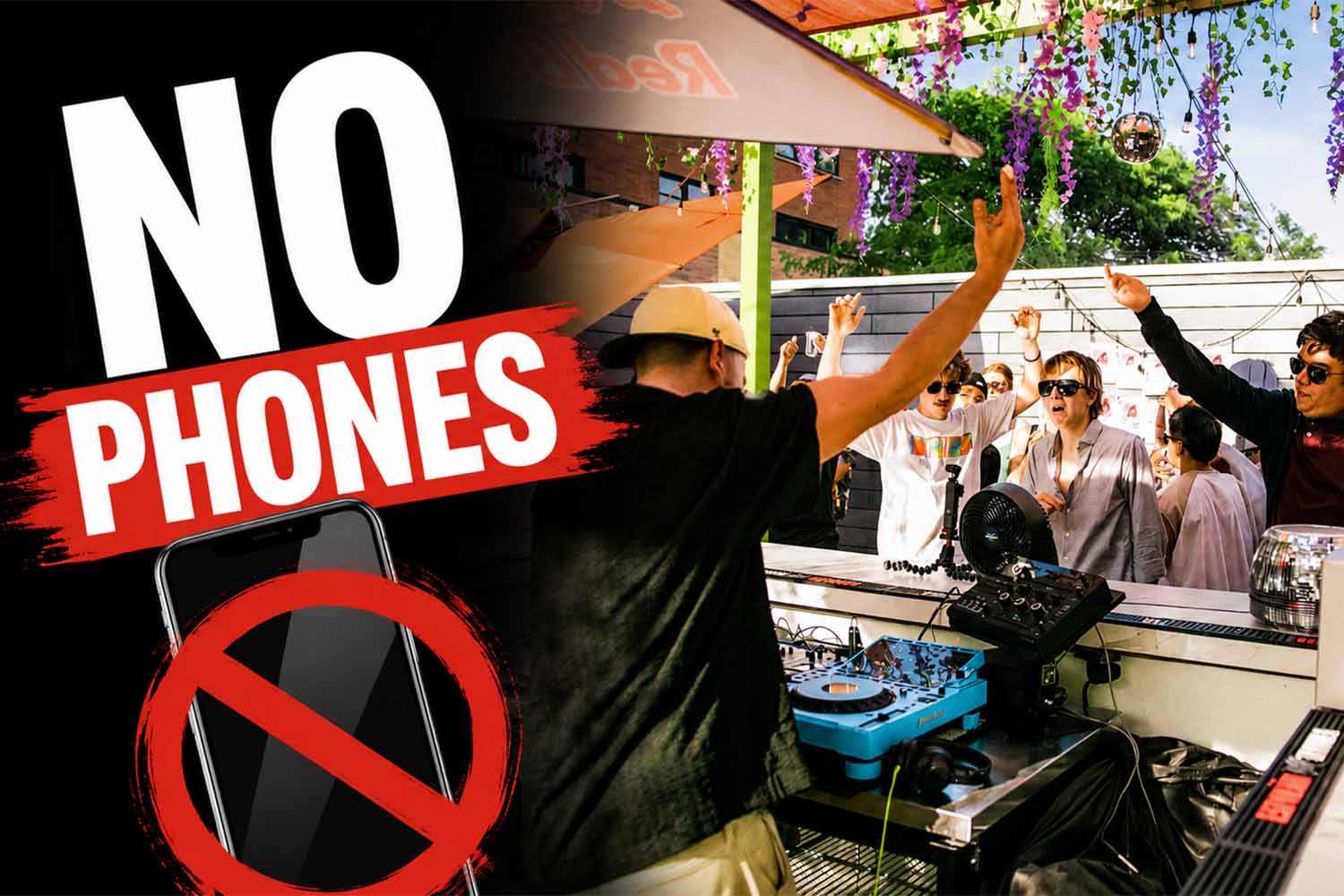
That was one of the main ideas behind As You Are: Project Bloom 001 at Good Night John Boy in Columbus. The event was built around music, dancing, presence, and a simple rule: no phones.
Guests had tabs placed over their phone cameras when they entered. The goal was not to be restrictive. The goal was to help people stay present, interact with the room, and give themselves permission to dance without feeling like every moment might be recorded.
The no-phone policy was only one part of the plan. The floral concept, DJ lineup, room layout, and even the amount of open space were all designed to support the same outcome. Project Bloom was a strong example of what happens when an event is treated as a complete experience instead of a collection of separate details.
Why Remove Phones From a Dance Party?
Phones change how people behave in public spaces.
When guests know cameras are active, they are more likely to watch themselves, monitor how they look, or stand back and record the moment instead of participating in it. Even people who never take their phones out can become more aware of being filmed.
That awareness creates hesitation.
A no-phone policy reduces that pressure. It tells guests that the room is meant for participation, not documentation. People can dance badly, sing loudly, try something new, or simply enjoy the music without wondering where the video might end up later.
For a dance-focused event, that freedom matters.
The policy also makes the event feel more private. Project Bloom was free and operated on a pay-what-you-can model, but it still felt intentional and curated. Removing phones helped create a sense that the experience belonged to the people who were actually there.
That is difficult to recreate through music alone.
Room Design Affects Whether People Dance
One of the most important decisions at Project Bloom had nothing to do with the DJ equipment.
We intentionally started with less space.
The event had the option to expand, but the initial plan was to keep guests concentrated near the DJ booth and main dance area. If the crowd grew, stanchions could be moved and more room could be opened.
This is basic DJ psychology, but it is easy to overlook.
A small group spread across a large area often looks and feels empty. Guests become more self-conscious because every person on the dance floor is highly visible. The same number of people placed in a tighter area feels active, social, and inviting.
People take cues from the room. When they see others standing close together, moving, and responding to the music, joining the party feels natural. When everyone is scattered, dancing can feel like a bigger decision.
The lesson is not to make people uncomfortable or overcrowd the venue. The lesson is to match the available space to the actual number of guests.
Good event design gives energy somewhere to collect.
The Music Needs a Clear Purpose
Project Bloom was described as a music-forward, dance-focused party. That distinction shaped the entire event.
The lineup featured several DJs playing shorter sets. Short sets can create momentum because every DJ enters with focus, makes an impact, and passes the energy forward before the room becomes too comfortable with one direction.
That format also creates variety. Each DJ can bring a different point of view while still supporting the identity of the event.
For the format to work, the lineup needs to feel connected. The goal is not for every DJ to compete for the biggest moment. The goal is to create a continuous experience where the room stays engaged from one set to the next.
That requires awareness.
A DJ needs to understand what happened before their set, what the crowd is responding to, and what the next performer may need. The best decision is not always playing the biggest record available. Sometimes it is leaving room for the party to grow.
This is where professional DJing becomes more than selecting songs. It becomes communication, timing, and leadership.
Details Should Support the Same Idea
The floral jungle theme was not just decoration.
Project Bloom was an outdoor daytime party during the summer, so the visual concept supported the location, season, and energy of the event. The flowers around the DJ booth, colorful CDJs, dancing platform, sponsor details, and venue layout all helped the event feel connected.
Strong event design does not require every detail to be expensive or complicated. It requires every detail to point in the same direction.
At Project Bloom, the direction was clear:
Be present.
Listen to the music.
Dance.
Connect with the people in the room.
The no-phone rule supported that idea. The tighter space supported it. The short DJ sets supported it. The visual design supported it.
When those elements agree with each other, guests do not need a long explanation. They understand the event by experiencing it.
What DJs and Event Producers Can Learn
The biggest takeaway from Project Bloom is that crowd energy can be designed, but it cannot be forced.
You cannot order people to dance. You can remove friction, reduce self-consciousness, create the right amount of space, and give the music a clear role.
Start by deciding what you want guests to do.
If dancing is the priority, avoid designing the room around sitting, recording, or watching from a distance. Keep the dance area visible and easy to enter. Give the crowd enough room to move, but not so much room that the party feels empty. Make sure the DJ lineup understands the larger goal.
Most importantly, make every major decision support the same experience.
A no-phone policy will not fix an event with unclear programming, poor sound, or a disconnected room. It works when it is part of a thoughtful system.
Project Bloom felt strong because the concept, space, music, and expectations were aligned. The event gave people a reason to be present and then created an environment where participating felt comfortable.
That is the real work behind a successful dance floor.
Planning a music-first event in Columbus or beyond? Visit my contact page to learn more about DJ and MC services built around intentional music, professional communication, and a dance floor that feels natural to join: [Contact Page]