
Hey! I’m Mike, I go by DJ AXCESS, and I’m a DJ, public speaker, and business coach based in Columbus, Ohio.
Watch the full video here: [YouTube Link]
Playing Lollapalooza for the first time reinforced something I have believed for a long time: getting the opportunity is only part of the job.
You still have to show up prepared, understand the environment, make good decisions quickly, work well with the people around you, and perform when the conditions are different from what you expected.
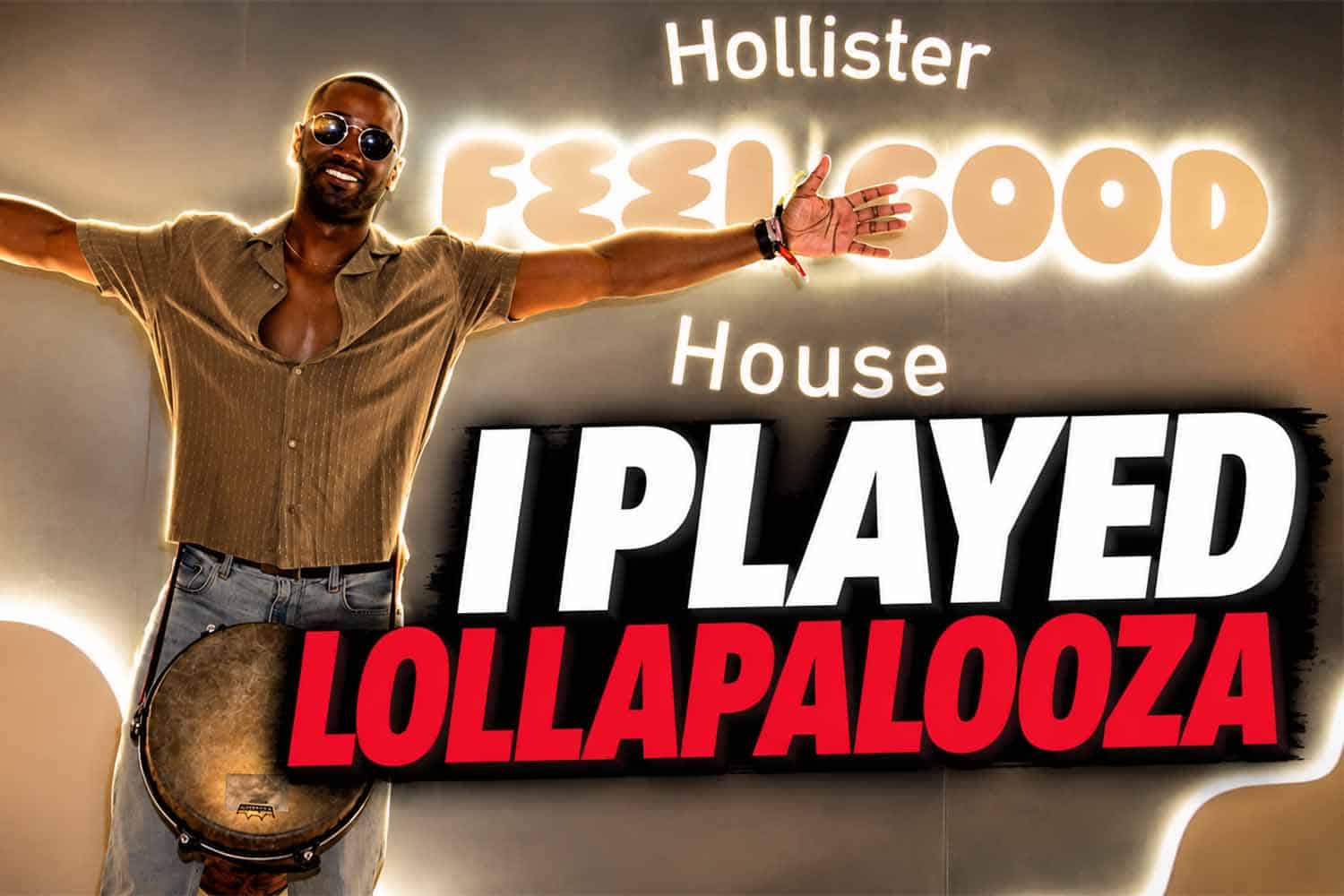
I was in Chicago performing two three-hour sets for Hollister at the Feel Good House during Lollapalooza 2026. This was my first major festival at this scale, and I wanted to document more than just the performance.
I wanted to show what actually goes into doing a gig like this.
Getting Booked Starts Before the Opportunity Exists
One of the questions I get from DJs is how you get opportunities like Lollapalooza.
There is not one answer.
Some DJs are aggressive about outreach. They send emails, DMs, make calls, introduce themselves to brands, and constantly look for the next opportunity.
My approach has been different.
I have a weekly checklist of things I believe will put me in a position to receive better opportunities over time. That includes creating content, getting professional photos and video, keeping my brand looking professional, building relationships, and continuing to improve as a performer.
The important part is consistency.
You cannot post for two weeks, not get booked at a major festival, and decide the strategy does not work.
Give your strategy enough time to produce a result. Then review it.
If you are creating content every day, look at what performed well at the end of the week. Find one thing you can improve. Maybe the audio gets better. Maybe you become more comfortable on camera. Maybe your editing improves.
Small improvements compound.
The other thing DJs should have ready is a strong press kit.
This opportunity had been discussed for months, but once everything became official, things moved quickly. Contracts, insurance, tax documents, photos, logos, and visuals were suddenly needed.
Having those assets prepared makes you much easier to work with.
And being easy to work with matters.
Know What You Need Before You Arrive
A professional rider is not about trying to look important.
It is about knowing what you need to do your best work.
For this event, the setup included Pioneer DJ equipment and an Allen & Heath CQ12 mixer. I also brought backup options and the equipment I needed for recording and potentially adding live percussion.
I like giving production teams multiple equipment options on my rider.
The first option may be my preferred setup, followed by a few alternatives that I know I can perform well on. That gives production flexibility without leaving the technical requirements completely open-ended.
That preparation mattered immediately.
I had not previously played on the CDJ-3000X units being used at the activation. I assumed connecting them would be essentially the same as using the CDJ-3000s.
It was not.
The connection I needed for HID mode was USB-C instead of the USB-B connection I was expecting.
Luckily, I had backup USB-C cables in my bag.
That is exactly why preparation matters. I did not need to panic or create a problem for production. I adapted, connected everything, and moved on.
Reading the Crowd Matters More Than Your Planned Set
The Feel Good House was not a traditional festival stage.
People were constantly entering and leaving the activation. Some were there to dance. Some were there for prizes. Others were making charms, checking out merchandise, or simply getting out of the heat.
That meant the audience could completely change every 20 or 30 minutes.
There was no single set that was going to work for three straight hours.
I had to read the room.
Sometimes I found a pocket of music that connected and stayed there. Other times I tried something, realized it was not working, and changed directions.
One of the most important lessons from the first day was that you cannot force the crowd you want.
You have to DJ for the crowd you actually have.
There were moments when the activation turned into a real party. There were other moments when people were more interested in the experience around them than the music.
Both situations were part of the job.
The Microphone Can Change the Entire Energy
The microphone ended up being one of the most useful tools I had.
The activation could easily feel like a lounge when people first walked in. Once the right group arrived, the microphone helped turn that passive energy into participation.
This is something I think DJs should practice more.
You do not need complicated phrases.
A simple direction at the right moment can change what happens in the room.
During the festival I watched other DJs do this extremely well. Bobby Boucher started one of his sets with almost nobody in front of the stage and gradually built a crowd.
A major part of that was his microphone work.
During breakdowns he would invite people closer, tell them to put their hands up, acknowledge new people arriving, and keep creating interaction.
Nothing about it was overly complicated.
It was confident, consistent, and intentional.
If microphone work is uncomfortable for you, practice it.
One simple exercise is to say something between songs. Fade the current song, speak clearly, introduce the next moment, and continue.
You will gradually find your voice.
Confidence usually comes after repetition.
Add Value Beyond Playing Music
After the first day, the organizer asked me for feedback.
I noticed that the activation had two major activities creating lines on opposite sides of the space. When those lines disappeared temporarily, people naturally moved toward the DJ booth and the party became much stronger.
I suggested treating the dance floor like another activity.
Instead of guests moving from one line directly to another, the team could encourage them toward the dance floor and then pull people from there for prizes.
The organizer was already thinking along similar lines.
That interaction reminded me that your value at an event does not have to stop with music.
If you see a way to improve the experience, communicate it professionally.
That does not mean taking over someone else’s job. It means understanding the larger event and recognizing where your experience can help.
The Bigger Opportunity Is Being Ready
Lollapalooza was a major milestone for me, but the biggest takeaway was not simply that I got to play it.
It was seeing how many things I had done before the festival made the weekend easier.
The press kit was ready.
The gear bag was prepared.
I had backup cables.
I understood my rider.
I was comfortable using the microphone.
I knew how to read different crowds.
I had experience working with brands.
None of those things were built specifically for Lollapalooza.
They were habits built over years that became valuable when the opportunity arrived.
That is the part I want DJs to understand.
You do not become ready after you get the opportunity.
You build the systems, skills, relationships, and habits first so that when the opportunity arrives, you can actually deliver.
If you want to see the full behind-the-scenes experience from Lollapalooza, including the setup, festival environment, crowd changes, gear decisions, and both days of performances, watch the full video above.