
Hey! I’m Mike, I go by DJ AXCESS, and I’m a DJ, public speaker, and business coach based in Columbus, Ohio. You can watch my video of this blog on Youtube.
There is a big difference between having songs you like and being ready to perform on short notice.
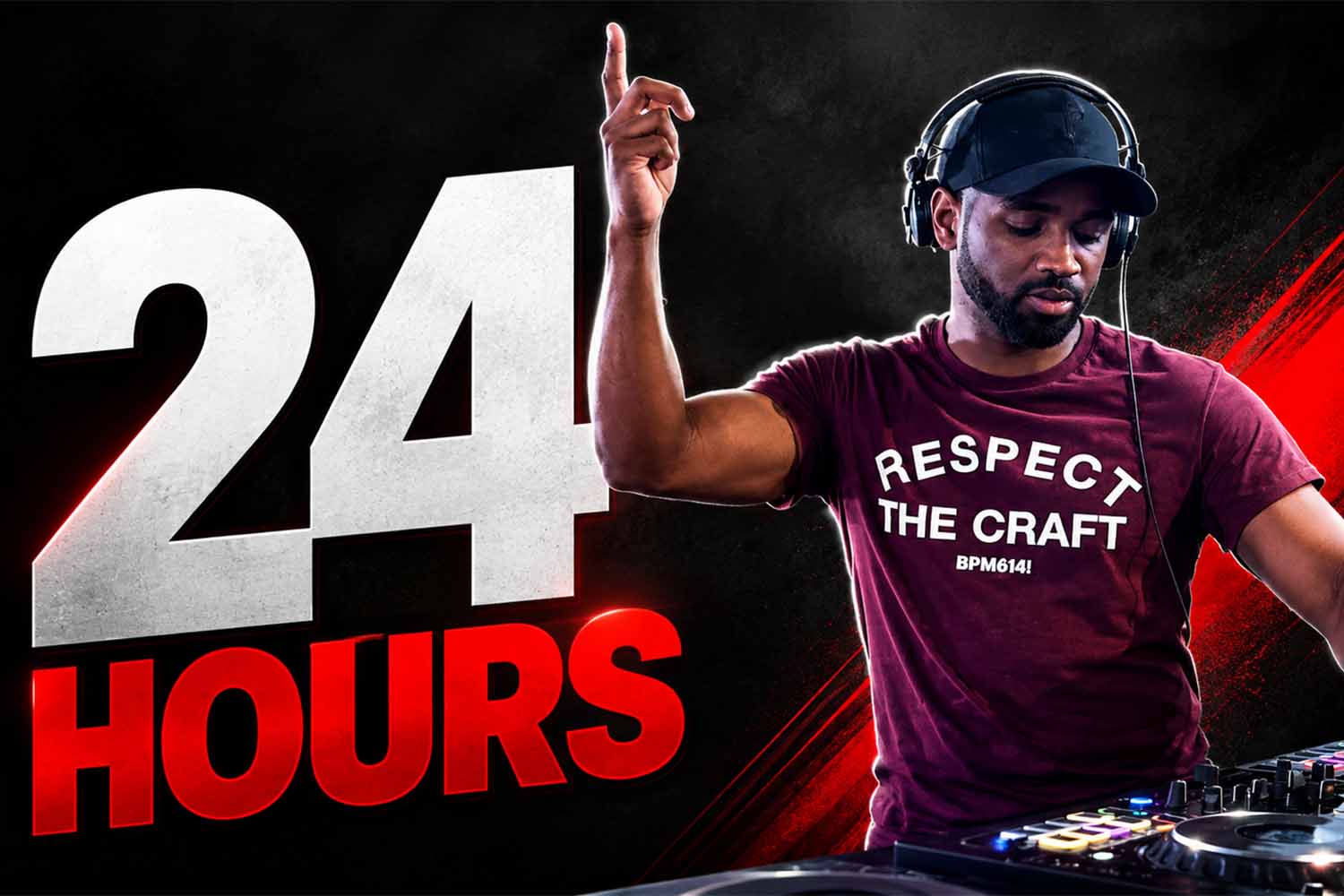
I recently found that out again at DJs Assemble in Syracuse, New York. One of the DJs could not make the trip, and I got asked to step in and do a surprise showcase set. I was honored. I was grateful. And I also knew the clock was ticking. I had about 24 hours to build something that felt intentional, polished, and worth presenting in front of a room full of DJs.
That is a very specific kind of pressure. It is not the same as DJing a wedding, a club set, or even a private event. When you are DJing for DJs, especially in a showcase environment, people are listening differently. They are paying attention to your transitions, your ideas, your pacing, your confidence, and whether the set feels like it actually goes somewhere. You cannot rely on autopilot. You need a plan.
What helped me most was not scrambling. It was having enough structure in place before the opportunity ever came.
Why preparation before the opportunity matters
A lot of DJs think preparation starts when the gig gets booked. That is too late.
The reason I was able to put together a showcase set in one day is because I had already done a lot of the work before I knew I needed it. I already had music organized. I already had crates built around certain genres, ideas, and moments. I already understood my own style and the combinations I like to play. That gave me something to work from instead of forcing me to build from zero.
When the set came up, I was able to spend about a half hour pulling together around 30 songs and putting them in an order that made sense. That is a completely different experience than starting with an empty crate and a vague idea. Once I had that first version, I let it sit. I came back the next morning, rearranged some things, tightened up the flow, set cue points, and practiced.
That process matters because your first idea is not always your best one. Sometimes the puzzle pieces fit together right away, and luckily this was one of those times. But even when that happens, you still need to revisit it with a clearer head and make sure the set is doing what you think it is doing.
How I approached the set itself
My goal was simple. No dead spots.
That does not mean every second has to be maximum intensity. It means there should never be a stretch where the room loses interest because nothing is happening. In a showcase set, especially for a DJ crowd, I want there to be either something people can sing along to, something that hits hard rhythmically, or some kind of idea that keeps the momentum moving forward.
I built the set around a few themes. I had some World Cup energy in there because of the environment and who was in the room. I also leaned into some of the house music I love, especially Afro House. Those choices gave the set some identity instead of making it feel like a random playlist of good songs.
That is an important distinction. A good showcase set is not just a stack of bangers. It needs shape. It needs intention. It needs a point of view.
The equipment factor and why practice still matters
Another layer in this situation was that I was not performing on my normal setup.
I usually know exactly how things feel on my own rig. In this case, I was playing on a FLX10 instead of my typical Rane Performer, and that changes things. The mechanics might not seem major from the outside, but when you are depending on certain visual cues, timing decisions, and muscle memory, a different setup can be challenging.
That is why practice was non-negotiable.
I had time in the room beforehand, and I used it. I practiced the transitions that felt a little more technical. I made sure I knew where my cue points were. I got more comfortable with how I would move through the set on unfamiliar gear. None of that is glamorous, but that is where confidence comes from. Confidence is rarely magic. It usually comes from repetition.
If you want to be ready for opportunities like this, you need more than taste. You need systems and reps.
What DJs Assemble gets right
The event itself also reinforced something I already believed. DJ conferences are about community first.
This was my second time attending DJs Assemble, and I am two for two on having a great experience. When I think about the conference, the two words that come to mind are ease and value. Everything is set up in a way that makes it easy to focus on the event. The Sky Armory hosts everything, and if you stay nearby, the logistics are simple. You are not wasting energy trying to figure out where to go next, where to eat, or how to get across town.
That matters more than people think.
For the ticket price, the value is strong. The content is useful, the people are high level, and the atmosphere makes it easy to connect with other DJs. You are not just learning from the official presenters. You are learning in the hallways, over meals, during practice, and on the drive there. I rode up with Bob Hickman, A-Roc, John Buycks, and Vince K, and even that car ride was valuable. We talked gear, what is working, what is changing, and what has been bugging us in the DJ world. That is part of the experience too.
If I had one area where the event could improve, it would be production. But I say that with perspective. DJs Assemble is still young, and the people running it are doing a lot well. You do not go to a conference like that because the stage production is perfect. You go for the access, the ideas, and the relationships.
The bigger lesson for DJs
The biggest takeaway from this whole experience is that opportunities favor organized DJs.
If you want to be the person who can say yes when something unexpected comes up, you need to prepare before the call comes in. Build themed crates. Save combinations that work. Practice performing ideas, not just collecting songs. Learn your gear, and learn how to adapt when the gear changes. Most importantly, create systems that make you faster under pressure.
That is what allowed me to step into this set with only 24 hours to prepare.
The actual prep once I knew about the set mattered, of course. I had to choose the music, shape the flow, practice, and execute. But the reason that prep was effective is because it sat on top of deeper preparation that had already been happening for a long time.
That is the part a lot of DJs miss. Great performances often look spontaneous from the outside, but they are usually built on structure.
If you are a DJ trying to get sharper, this is where I would start. Get your organization right. Build better crates. Practice more intentionally. Treat your sets like performances, not just playlists. That is what gives you the flexibility to perform when the opportunity shows up.
If you are planning an event and want a DJ who knows how to prepare, adapt, and lead in real time, reach out through my contact page. I bring that same level of structure and awareness to weddings, corporate events, and live performances.