
Hey! I’m Mike, I go by DJ AXCESS, and I’m a DJ, MC, public speaker, and business coach based in Columbus, Ohio.
Watch the full video here: [YouTube Link]
DJing from a pickup truck looks simple until the truck starts moving.
A parade setup changes almost every part of the job. You are outdoors, surrounded by other floats, working without traditional power, and performing on a platform that can accelerate, brake, and turn at any moment. The music still matters, but safety, preparation, communication, and awareness matter just as much.
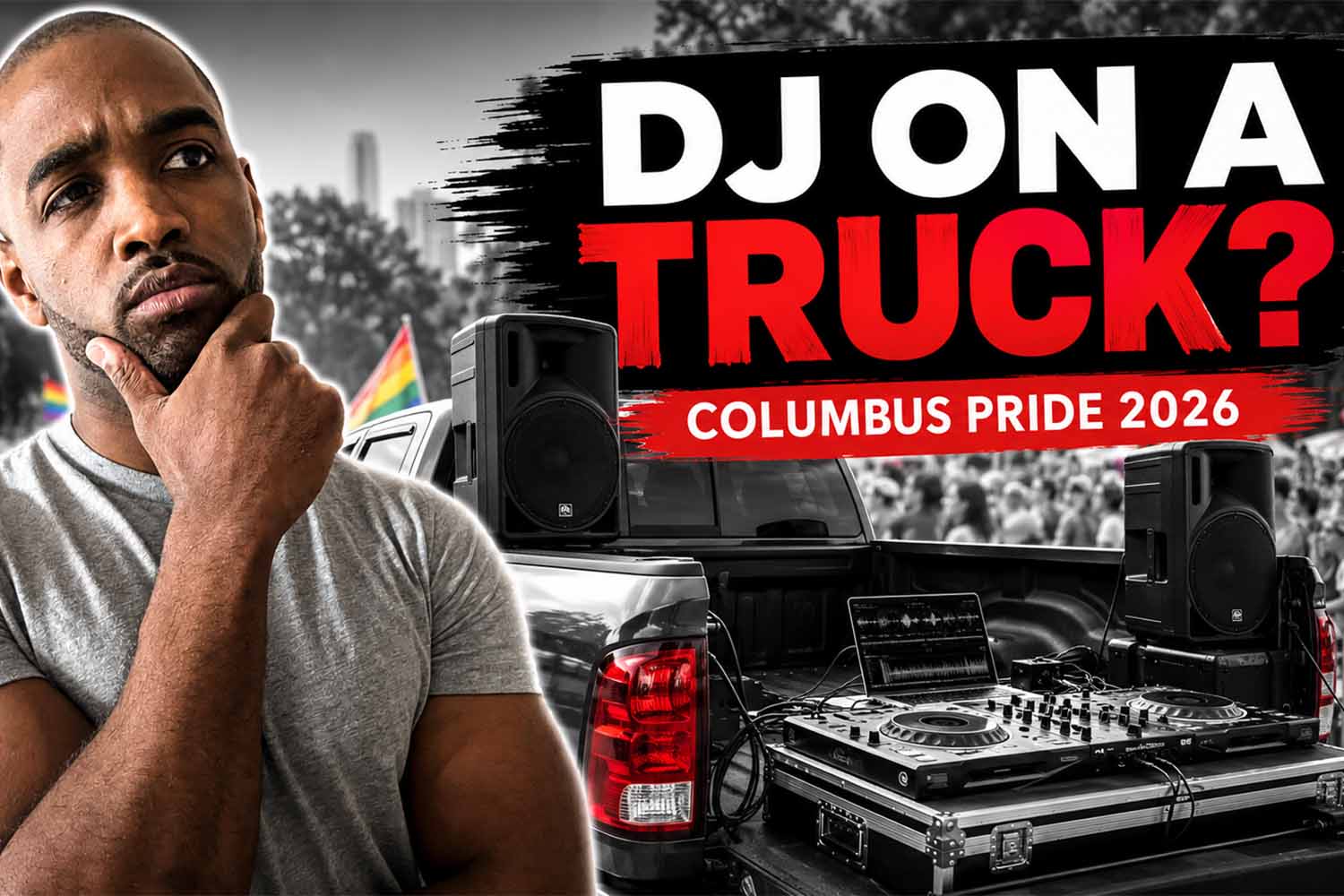
For Columbus Pride 2026, I performed from the back of a pickup truck with a compact DJ setup. This is the system I used and the lessons I have learned from doing this event over multiple years.
Build a Simple, Self-Contained Setup
The first priority is power. You cannot assume the truck will have a reliable outlet, and you do not want to build a complicated system that depends on the vehicle running correctly.
I used a Jackery 2000 portable power station. For this type of setup, I think anything above the 500 level can work, depending on the length of the parade and how much equipment you are powering. The bigger concern is understanding your actual power draw before the event.
My system included two EV EKX-12P powered speakers and an AlphaTheta OMNIS-DUO controller. The Jackery powered both speakers and the controller without an issue. I have used that power station for events lasting close to eight hours, so I knew the parade would be well within its limits.
Test the full setup before the event. Plug in every speaker, controller, charger, and accessory you plan to use. Run the system at performance volume and confirm how quickly the battery drains. Do not make your first real test the morning of the parade.
Keep the setup as simple as possible. Every extra cable, stand, and device becomes one more thing that can shift, disconnect, or fail while the truck is moving.
Volume Control Is Part of Professionalism
One of the biggest mistakes DJs make during parades is treating the lineup area like the main event.
Before the parade starts, every float is usually sitting close together. Many of them have speakers, performers, or their own music. If everyone plays at full volume, the result is not more energy. It is noise.
During the waiting period, I keep the music loud enough for the people around our float to enjoy it, but not so loud that I am fighting every other sound system nearby. Once the parade begins and the floats spread out, that is when I can increase the volume.
This is the same principle I use at conferences and other shared event spaces. The goal is not to prove that your sound system is the loudest. The goal is to use the correct volume for the environment.
Most people will not walk up and tell you that the music is too loud. The DJ has to recognize that on their own. Volume is not only a technical decision. It is part of reading the room, respecting the event, and representing the client professionally.
Choose the Driver Carefully
The driver is one of the most important people in the entire setup.
A movement that feels gentle from inside the truck can feel much stronger when you are standing in the bed next to speakers, tripods, and DJ equipment. Acceleration, braking, and turning all need to be slower and more deliberate than normal.
Before the parade starts, explain the setup to the driver. Remind them that a person is standing in the truck bed and that the equipment has a higher center of gravity. Ask for slow takeoffs, gradual stops, and careful turns.
Parades also include children, pedestrians, volunteers, and other vehicles moving unpredictably. The driver may need to react quickly, but the goal is to reduce the likelihood of sudden movements by traveling slowly and leaving extra space.
Use someone you trust. I have worked with the same drivers for several years, and that familiarity helps. During the first year, there were a few moments when the truck moved more aggressively than expected. We communicated, adjusted, and improved the process in later years.
Do not be afraid to speak up during the parade. A quick reminder to slow down can prevent a much bigger problem.
Secure the Gear Without Overcomplicating It
Your setup should be stable before the truck moves.
For a first-time parade setup, straps are a smart addition. They can help secure speakers, stands, cases, and power equipment. I also carry tape for smaller items and cable management.
The best solution depends on the truck bed and the exact equipment you are using. The goal is not to lock everything down so tightly that you cannot access it. The goal is to prevent tipping, sliding, and disconnected cables.
Place heavier items low and close to the center of the truck bed when possible. Avoid placing loose bags, drinks, or accessories near the edges. Keep walkways clear so you can adjust your position without stepping over cables.
Also think about your own balance. Wear comfortable shoes with good traction. Do not create a booth position that forces you to stand at an awkward angle for the entire parade.
Prepare for Weather and Long Waits
Outdoor events require more than DJ equipment.
I bring an umbrella, a tarp, sunscreen, a hat, comfortable shoes, and a small emergency bag. The tarp can provide shade, cover equipment during light rain, or protect gear while waiting.
Parades often involve long periods of inactivity before the route begins. We may arrive early, move into position, and then wait for one or two hours. That means you need enough water, weather protection, and personal comfort items to remain focused once the actual event starts.
The most professional setup is not only the one that produces sound. It is the one that allows you to perform well for the entire day.
Simplify the Music Workflow
For this event, I used the OMNIS-DUO with USB drives instead of relying on a laptop.
A laptop can work, but direct sunlight, glare, vibration, and movement make it harder to see the screen and type. Playing from USB drives gave me a cleaner and more stable workflow.
The advantage of the OMNIS-DUO is that I could still connect a laptop if I needed access to a track that was not on my drives. That gave me a simple primary workflow with a flexible backup option.
Whatever controller you choose, build the system around reliability. Outdoor mobile events are not the best time to test a complicated performance setup.
The Strategic Takeaway
DJing from a pickup truck is not difficult because of the mixing. It is difficult because the environment is constantly changing.
The strongest setup is powered independently, easy to secure, simple to operate, and designed around clear communication with the driver. The strongest DJ is also aware of volume, weather, crowd movement, and how every decision affects the people around the float.
Preparation gives you the freedom to focus on the music once the parade starts.
Planning a parade, festival, brand activation, or outdoor event in Columbus? Visit my contact page to learn more about working with DJ AXCESS.