
Hey! I’m Mike, I go by DJ AXCESS, and I’m a travel DJ, hype man and public speaker based in Columbus, Ohio. You can watch my Youtube recap of this blog here: https://youtu.be/k_EOAT-bzoE
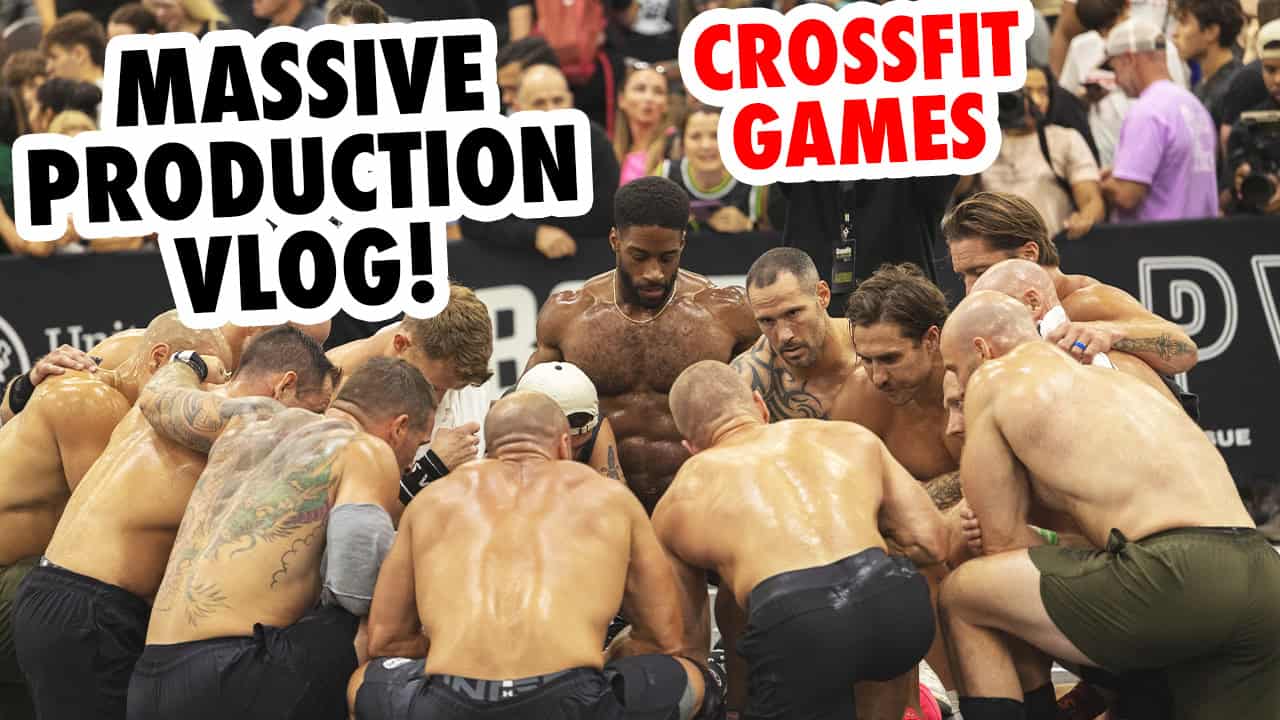
This year, I stepped into a role I’d never taken on before: producing my first-ever large-scale event. For five days at the Columbus Greater Convention Center, I booked DJs, set up and managed sound across four different stages, DJ’d myself, and handled the largest contract in my company’s history — the CrossFit Games 2025 Age Group Challenge.
What follows is my behind-the-scenes recap: not just the music, but the production, the problem-solving, and the people who made it possible.
Setup Day
Every production has a “before it begins” moment — the pre-show setup day that determines how smooth everything else will go.
I arrive at the Convention Center at 10:00 a.m., with the first request being straightforward: organizers wanted a single speaker and microphone by 11:00 to walk athletes through lifts, rules, and scoring. On paper, simple. In reality, the first snag came quickly.
When we did the site visit, we were shown power towers in the hall. On show day? Locked. No access. That’s when experience and preparation matter. Luckily, I had a battery-powered option with me: the Anchor Audio Liberty 2. It’s compact, versatile, and built with its own wireless mics. I walked my contact Joe through the setup — he only needed it for 90 minutes, and the speaker battery easily runs six hours. Problem solved.
With the first stage covered, I turned my focus to the bigger picture. This was just day zero. Over the next five days, four full stages needed to be installed, tuned, and managed. That’s when the reinforcements arrived.
Building the Team
When you’re producing something of this scale, you don’t do it alone. I called in Bob from Marquee Ohio and Vince K to help bring it all together. Later, Trish “The Housebat” Dan, and Braden assisted with DJ sets.
We unloaded truck after truck, sorting systems into the right zones:
-
Main Stage: JBL 18” subs, JBL 12” tops, Pioneer Rev7 with Serato, Behringer mixer run via iPad, EV microphones. This was the hub of competition energy.
-
Floor One: an all-white booth powered by the brand-new RCF NXL 14s with 15AX subs. Clean, sharp, and aesthetically striking in the open convention space.
-
Floor Three: QSC KW181 subs paired with JBL PRX 712s, a Pioneer Rev5, and a ProX booth. A solid mid-sized system.
-
Floor Four: my own gear — EV KX12s, a RANE Performer, two Shure mics, plus a pair of wireless Wave 8 speakers filling in coverage for the audience.
The key to making all of this work wasn’t just gear, it was organization. We staged cables, booths, and speakers so each floor could be built systematically. And we paid attention to details that matter: like using real gaff tape instead of budget tape that leaves residue, and running cables cleanly, so every line looked intentional.
I still remember Vince spotting a straighter backstage route for one of my lines — cleaner, safer, smarter. Those are the kinds of adjustments that happen when you work with pros.
Execution in Action
Once the systems were up, it was time to get sound right. For me, that started with making sure every microphone was bulletproof.
Vince stepped up to EQ our wireless mics. He swept for bad frequencies, notched out feedback-prone spots, added a high-pass filter for clarity, and dropped in light compression. The result? MCs could walk in front of speakers, project to athletes, and we never once fought the dreaded squeal of feedback. It’s not glamorous, but it’s the difference between chaos and professionalism.
From there, it was about balancing live DJing with event needs. Not everything required a full set. Some blocks needed walk-in playlists. Others needed royalty-free tracks because the competition was live-streamed. Thanks to my years streaming on Twitch, I already had curated Spotify playlists full of royalty-free music (shout out to Harris Heller’s StreamBeats). When the cameras were on, I had folders of hype moments ready to hit.
And when the schedule shifted — as it always does — we stayed flexible. For one late event, three stages ended up running simultaneously when only two were scheduled. Instead of scrambling, we simply pivoted: I handled the main floor while MCs triggered music through iPhone hookups, and our backup MP3 players carried a fourth option if needed. There was always music, always coverage, always control.
Challenges and Adjustments
Big events aren’t about if problems will come up. They’re about how you respond.
One adjustment I made quickly was protecting my hearing. Standing between dual 18-inch subs for twelve hours straight is brutal. I rotated between in-ear monitors and earplugs throughout the weekend. Small decision, big difference.
Another challenge was the grind of back-to-back gigs. Thursday meant nearly twelve hours at CrossFit. Friday included six more hours plus a nightclub gig. Saturday was a wedding that went until 1 a.m. And Sunday morning, I was back at the Convention Center for more DJing and final teardown. That’s when having a team saved me. Trish picked up a Sunday shift, giving me time to recover after the wedding. Bob’s Marquee team ran Saturday flawlessly. Vince’s system work kept everything humming.
Even the small things mattered. Like bringing along two dedicated MP3 players loaded with sports mixes, cocktail mixes, and background sets. Why? Because I only have one Spotify account. If multiple stages needed programmed music at once, I couldn’t risk logouts or downtime. Those players were cheap insurance.
And of course, flexibility was constant. Schedules shifted. Rooms moved. But every stage had a backup, every MC had a mic, and every audience had music.
Closing Out the Week
By Sunday evening, we had done it: five days, four stages, multiple DJs, countless hours of music and announcements. The systems came down as smoothly as they went up.
Looking back, I can honestly say this was the biggest and most challenging booking I’ve ever taken. And it worked because of collaboration. Bob, Vince, Trish, and the entire support team made sure no one carried the load alone.
I left that week proud — not just of the music I played, but of the production we delivered. The athletes heard every cue. The organizers trusted every transition. The live stream rolled without interruption. And the entire event carried the energy it deserved.
That’s what I bring to the table: the ability to DJ, yes, but also to lead, coordinate, and deliver production value that makes a large-scale event flow.
If you’re planning a fitness competition, a multi-stage conference, a brand activation, or any event where music and production need to be seamless, let’s talk. I’d love to bring this same energy, professionalism, and teamwork to your event.