
Hey! I’m Mike, I go by DJ AXCESS, and I’m a DJ, public speaker, and business coach based in Columbus, Ohio.
Watch the full video here: [YouTube Link]
Most DJs think of an external mixer as a simple way to connect a controller, microphones, and speakers. That is part of the job, but it is not why the Allen & Heath CQ-12T has become one of the most important pieces of gear in my wedding setup.
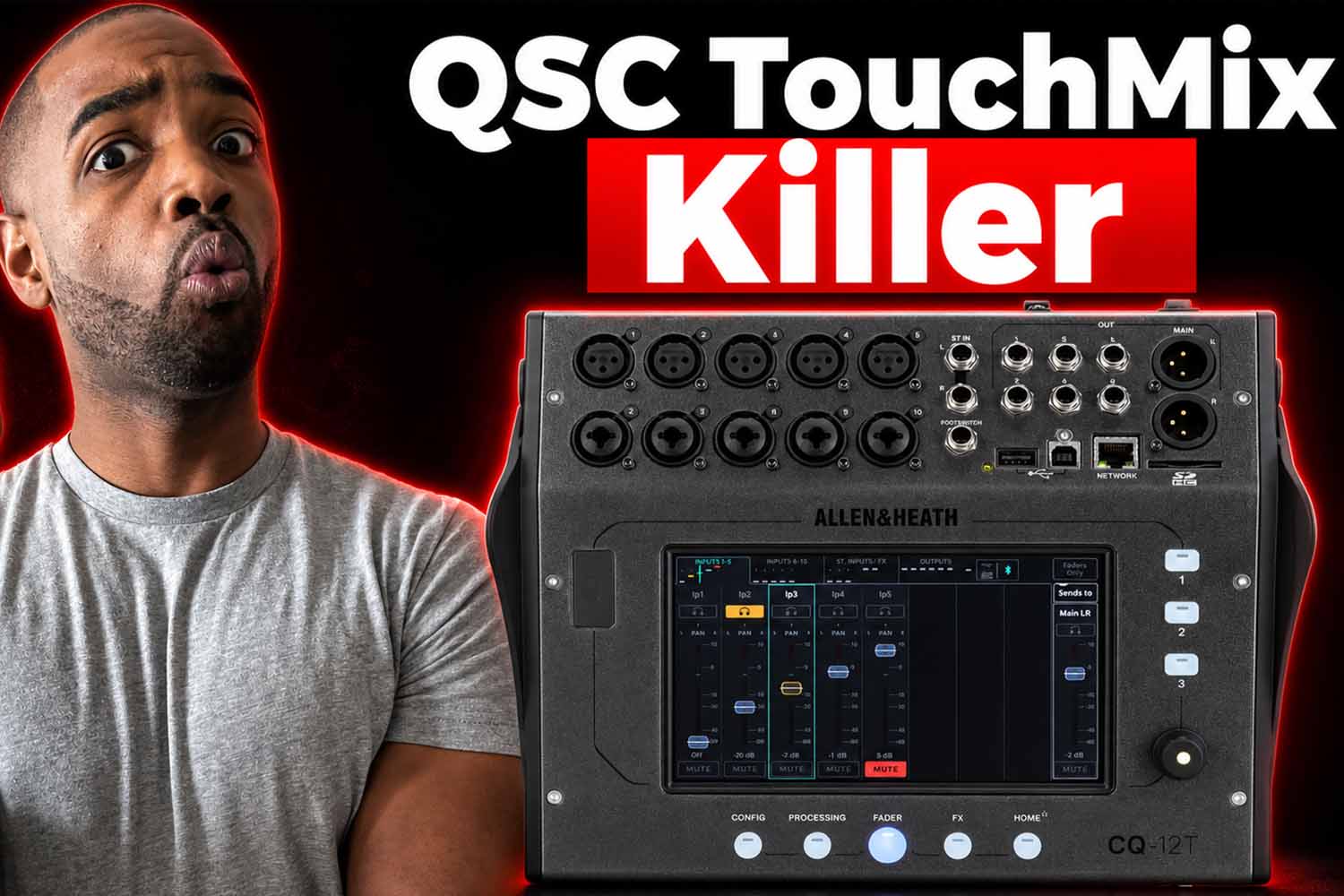
For me, the CQ-12T is the brains of the operation. It manages my DJ signal, microphones, backup audio, live drums, saxophone, in-ear monitors, effects, additional outputs, and feedback control. I bought it only a few months after it was released, when most DJs were still talking about the QSC TouchMix 8.
After using it consistently, I can say that it has continued to do more than I originally expected.
Why I Chose the Allen & Heath CQ-12T
The QSC TouchMix 8 already had a strong reputation, but I wanted something modern, compact, and designed around the way I actually work.
The CQ-12T gave me 12 channels, a built-in touchscreen, scene storage, remote control from an iPad, multiple outputs, automatic gain tools, and feedback suppression. There is also a CQ-18T with more channels and built-in Wi-Fi, but built-in Wi-Fi was not a major selling point for me.
When an iPad connects directly to a mixer’s private Wi-Fi network, it may lose access to the internet. That creates a problem at weddings because I use my iPad for notes and other online information throughout the event.
My solution was to connect the CQ-12T to a separate GL.iNet travel router. The router connects to the mixer, my iPad, and either the venue’s Wi-Fi or my phone. That allows me to control the CQ-12T from anywhere in the room while remaining connected to the internet.
Scenes Make Complex Setups Repeatable
One of the first things I use on the CQ-12T is the scene function. A scene saves the basic structure of the mixer, including channel assignments, mute states, and other settings.
My main wedding scene already includes my DJ channel, two microphone channels, a phone backup channel, a cue channel, drums, and saxophone. I can color-code the channels and arrange the fader page around the way I work.
That matters because I am not rebuilding my mixer from scratch before every event. I can load my normal setup, confirm that everything is routed correctly, and make adjustments for that specific wedding.
Scenes become even more valuable when an event includes different rooms, musicians, or microphone requirements. A DJ could save one scene for a standard wedding, another for a ceremony, and another for an event with a saxophonist or live drummer. The goal is not only convenience. It is consistency.
Building a Better In-Ear Monitor Mix
One of my favorite uses of the CQ-12T is creating a complete in-ear monitor mix.
The headphone output from my Rane Performer does not go directly to my headphones. I route that output into a channel on the CQ-12T. My in-ear monitor mix can then include the cue signal from the Performer along with my drums, the saxophone, microphones, or any other source connected to the mixer.
If I connected my headphones directly to the DJ controller, I would only hear what comes from the controller. Routing it through the CQ-12T gives me control over how much of every source I hear.
The same approach helps musicians performing with me. The CQ-12T has six outputs, so I can create a separate monitor mix for a saxophone player. They can ask for more saxophone, more of the DJ mix, less microphone, or a different overall balance.
The musician hears what they need, I hear what I need, and the main sound system can have a completely different mix.
Effects, Filters, and Automatic Gain
The CQ-12T gives me individual processing for each channel. If the saxophone needs more reverb, I can add it directly to that channel. If the drum channel needs a high-pass or low-pass filter, I can make that adjustment without changing the rest of the mix.
Automatic gain is another useful feature. I can ask a saxophone player to perform for a short period while the CQ-12T analyzes the signal and helps set the gain. Gain assistance can also help manage sudden changes in level if a performer plays louder than they did during soundcheck.
No automatic feature replaces listening and good judgment. The value is that the CQ-12T gives me tools that support the decisions I am already making.
Automatic Feedback Suppression
The automatic feedback suppression system is one of the best features on the CQ-12T.
Some systems respond to feedback by lowering the volume of the entire channel. The CQ-12T can identify the specific frequencies causing feedback and notch those frequencies out instead. I can configure the system before the event or allow it to respond as feedback develops.
Depending on the settings, it can gradually return those frequencies over time instead of leaving the entire mix affected for the rest of the night.
At weddings, feedback can happen because a microphone moves closer to a speaker, a musician changes position, or the room changes as guests enter. Feedback suppression does not replace proper speaker placement and gain structure, but it provides an important safety net.
Who Should Consider the CQ-12T?
I use the CQ-12T for more than the average DJ may need. My setup can include DJ audio, multiple microphones, a backup phone, live drumming, saxophone, in-ear monitors, and separate speaker outputs.
A mobile DJ who only needs two audio channels and one microphone may not use every feature. A wedding DJ who works with live musicians, manages multiple rooms, uses wireless speaker feeds, or wants independent monitor mixes will have more opportunities to take advantage of it.
It can also make sense for small bands, acoustic groups, violinists, quartets, and other performers who need a compact digital mixer that can operate on its own or be controlled remotely.
The Strategic Takeaway
The best external mixer is not simply the one with the most channels. It is the one that helps you build a repeatable system, solve problems quickly, and control every signal that matters during the event.
The Allen & Heath CQ-12T has become one of my favorite pieces of gear because I originally purchased it for basic remote control, but it continued to solve more problems as my setup developed. It now manages the audio structure behind my weddings and live collaborations.