
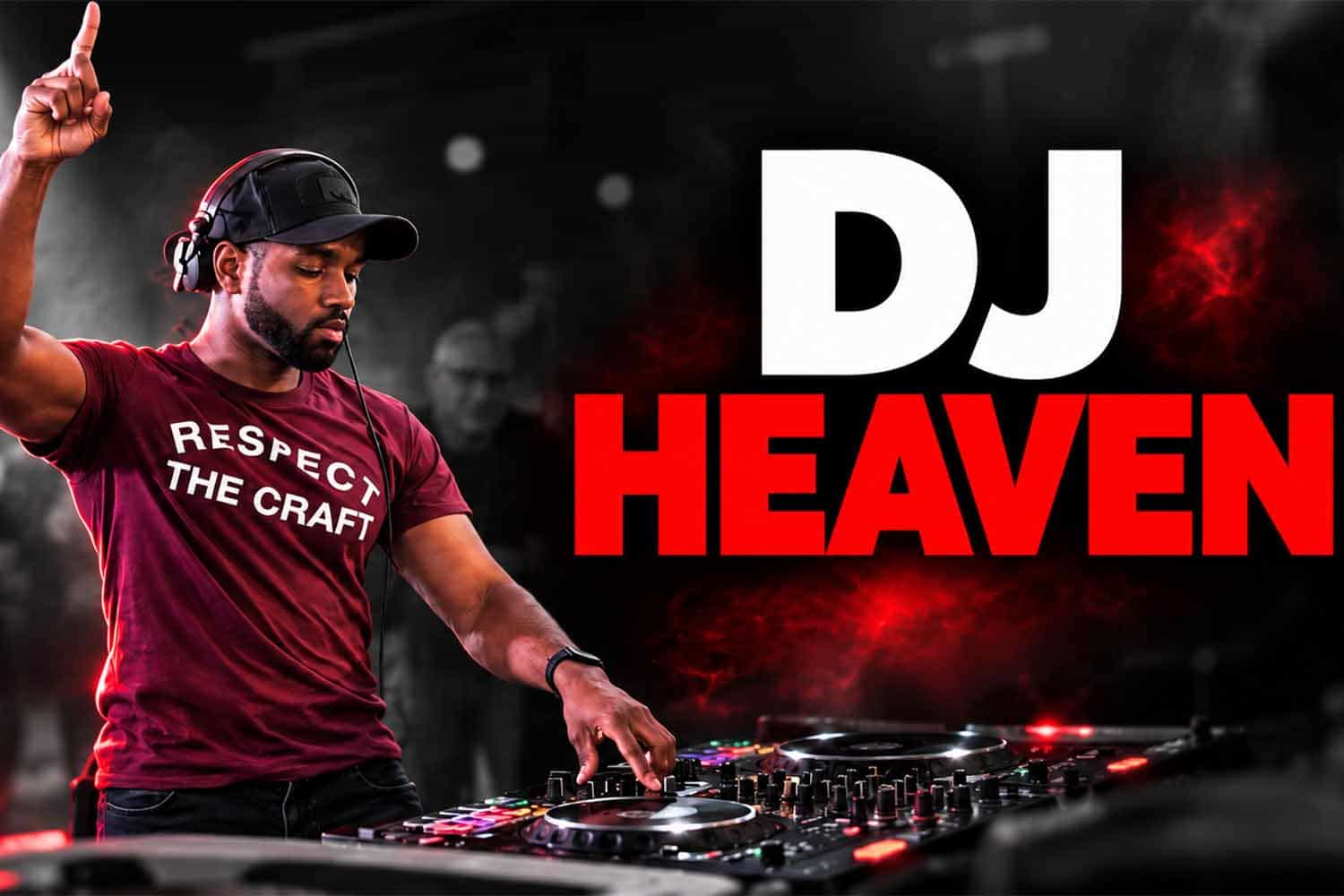
Hey! I’m Mike, I go by DJ AXCESS, and I’m a DJ, public speaker, and business coach based in Columbus, Ohio.
Watch the full video here: [YouTube Link]
Columbus DJs finally have a place built specifically for DJs.
BPM 614 is a new space in Columbus where DJs can practice, learn, test gear, and connect with other people in the community. I’m also one of the educators there, and after teaching my first lesson in the space, I think it fills a gap that Columbus has had for a long time.
There have always been places to buy DJ equipment. What we have not really had is a place where buying gear, learning how to use it, practicing on professional equipment, and meeting other DJs all happen under one roof.
That is what makes BPM 614 different.
Access to Gear Changes How You Learn
One of the biggest barriers for newer DJs is access.
Maybe you own a Pioneer DDJ-FLX4 at home. It is a great controller to learn on. Then you get an opportunity to play at a nightclub and find out the booth has CDJ-3000s and a DJM-A9.
The fundamentals of DJing are still the same, but standing in front of unfamiliar equipment for the first time during a real gig is not where you want to figure everything out.
At BPM 614, you can reserve space and practice on equipment you may not own yourself. That includes systems like CDJ-3000s, the newer CDJ-3000X, professional mixers, turntables, vinyl setups, and other equipment.
That access matters.
You do not necessarily need to buy every piece of equipment you might encounter in your career. You do need to know how to walk into different environments and get comfortable quickly.
Being able to practice before the opportunity arrives gives you a much better chance of being prepared when it does.
DJing Is Simpler Than People Make It
During my first lesson at BPM 614, I was working with Rob, who was brand new to DJing.
One of the first things I told him was that DJing can be boiled down much further than people think.
Song selection and volume control will take you a long way.
New DJs are constantly exposed to videos about scratching, advanced transitions, effects, loops, stems, and complicated mixing techniques. Those things can all become useful eventually.
They are not where I would start.
I told Rob to choose 20 songs that actually represent him. If somebody threw a party at your funeral, what are the 20 songs they would play because everyone knew those songs represented you?
Start there.
Know those songs inside and out. Learn where they start, where the chorus happens, how the energy changes, and when you would actually want to play each one.
Then go from 20 songs to 50. Eventually move toward 100.
Once you start DJing real events, your music organization will begin to make more sense because it will be based on experience instead of theory.
You might realize you are playing a lot of hip-hop. Maybe it is house, Latin music, R&B, or something completely different.
Now your folders actually represent how you DJ.
Learn the Mixer Before You Learn the Tricks
We also spent time breaking down the mixer.
Before somebody worries about complicated transitions, I want them to understand the actual signal path.
What does the trim control?
What happens when your signal starts clipping?
What do the channel faders do?
How does EQ affect what the audience hears?
How do you preview your next song in your headphones without sending it through the speakers?
These seem like basic questions, but these are the controls you are going to touch constantly.
The goal is not to memorize every button on a DJM-A9.
The goal is to understand the fundamentals well enough that when you stand in front of a different mixer, you can identify the same basic functions and start working.
That is one of the benefits of learning in a space with different types of professional equipment.
You stop learning one specific controller and start learning how DJ equipment works.
You Do Not Need to Beat Match Every Transition
This is another area where I think newer DJs make the process harder than it needs to be.
You can be a great DJ without beat matching every transition.
There are DJs who can control a room for hours through song selection, microphone work, timing, and energy without doing technically complicated mixes between every record.
That does not mean beat matching is useless. I use it all the time.
It means beat matching is one tool.
During the lesson, we worked on simple phrase mixing and volume transitions. When one song is approaching the point where you want to leave it, you begin preparing the crowd for the change and bring in the next record at the right moment.
If two songs are very similar, that transition might happen quickly.
If the styles or energy are dramatically different, you may need to create more separation between them.
That is where DJing starts becoming less about pushing buttons and more about understanding people.
You are controlling how the room experiences the change.
The Community Might Be the Most Important Part
The gear is cool. The rooms are useful. The education matters.
But I think the community piece could end up being one of the biggest benefits of BPM 614.
DJing can be incredibly isolated.
A lot of DJs practice alone, build their libraries alone, watch tutorials alone, and then show up to gigs where they are also working alone.
Having a physical place where DJs can practice, ask questions, hear different speakers, try equipment, meet educators, and talk with other DJs creates opportunities that are difficult to reproduce online.
BPM 614 is still brand new, and the space is continuing to develop. They are adding sound treatment, building out the rooms, and expanding what is available.
But the core idea is already there.
Gear, education, practice, and community in one place.
If you are a Columbus DJ who wants to become more comfortable on professional equipment, needs somewhere to practice, or wants in-person DJ training, BPM 614 is worth checking out.
I’ll also be teaching lessons there, so if you want to work with me in person, this is currently the best way to do it. BPM614 Website